Internal Promotion vs External Hiring: What Actually Works Better in 2025?
The cost of replacing an executive might shock you – it can reach 200% of their yearly salary. The Bureau of Labor Statistics reports median executive pay tops $100,000 annually. This is a big deal as it means that organizations take a massive financial hit during executive transitions.
Your organization faces a crucial choice when positions open up: promote someone internally or bring in fresh talent from outside? Internal promotions make financial sense, and there’s more to this story. Studies show internally promoted executives succeed more often than external hires. Companies still lean toward external recruitment, though data proves employees who move up within three years stay twice as long – showing a 70% retention rate.
This piece dives into both approaches and what they mean for businesses in 2025. We’ll break down everything from costs to company culture, giving you a detailed roadmap to make smart talent decisions. Your team’s morale takes a hit when high-performing employees who receive great feedback don’t get opportunities to advance.
Internal Promotion: Benefits and Challenges
The impact of internal promotions ripples through your entire organization. Your approach to the process determines whether these ripples bring positive change or disruption.
Faster onboarding and lower costs
Your internal candidates get up to speed 20% faster than external hires [link_1]. They’re also twice as likely to become top performers in their new roles. The process saves money by cutting out job board fees, background checks, and lengthy interviews. Companies can put these savings back into leadership development or team bonuses, which creates a cycle of investing in talent.
Boosts morale and retention
Companies that promote from within show they value loyalty and performance. Staff members stay 25% longer at organizations with internal promotion opportunities. Everyone can see a clear path forward, which builds an environment where people want to do their best. Recognition makes a big difference – top performers who get regular acknowledgment are 2.2 times more likely to go beyond their normal duties.
Risks of internal conflict and skill gaps
Promoting from within comes with its challenges. About 25% of internally promoted senior executives don’t succeed in their new roles. The shift from peer to leader often proves difficult. Companies that promote based on past performance instead of leadership potential risk poor management and high turnover—this is the Peter Principle. Team dynamics can suffer when passed-over employees feel resentful.
Why don’t companies promote from within
The benefits are clear, yet many companies still look outside first. A striking 57% of professionals say they find it easier to switch companies than move up where they are. The situation gets worse when you consider that 30% of HR leaders don’t make reskilling and upskilling a priority. This creates a harmful pattern: companies skip developing internal talent, use skill gaps as an excuse to hire externally, and lose their best people to competitors who offer growth opportunities.
External Hiring: When and Why It Works
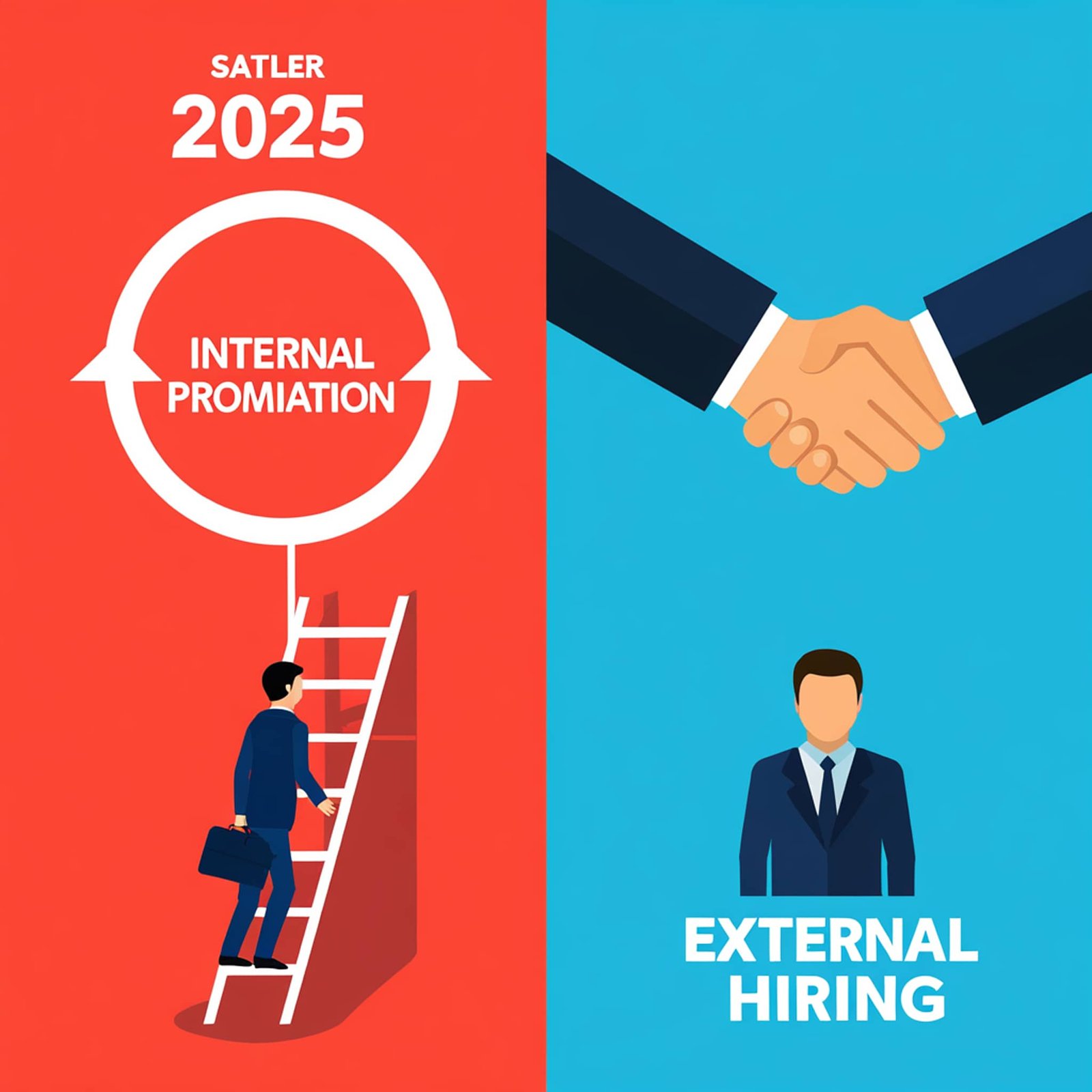
Your business might need talent from outside your organization’s walls. External hiring helps you find qualified candidates who can fill skill gaps and bring new ideas to your company culture.
Access to a broader talent pool
External hiring gives you unlimited options compared to internal recruitment, which only looks at existing employees. Your company can tap into global talent markets when you can’t find specialized expertise in-house. Companies can be substantially more selective with external recruitment by setting specific requirements for education, expertise, and experience. This becomes vital when you need rapid skill infusion in areas that grow fast or need high-level specialists.
Bringing in fresh views
New ideas are the biggest reason companies look outside. External hires bring unique viewpoints from their different organizational experiences, which helps them question current practices. These new team members challenge existing methods, suggest different ways to solve problems, and spark new ideas in teams that might have become too closed off. External candidates are great at spotting areas that need improvement and suggesting new ways to boost productivity.
Higher costs and longer ramp-up time
External recruitment has clear benefits but comes with big financial impacts. External hires usually earn 18-20% more than internal promotes in similar roles. The Society for Human Resource Management’s research shows a bad hire can cost 50-60% of an employee’s yearly salary. The costs go beyond just salary – you’ll need to pay for job posts, recruitment agencies, and candidate travel.
Cultural misalignment risks
Culture fit remains the biggest long-term risk. Research shows external hires fail more often than internal promotions, especially at executive levels. External hires are 61% more likely to get fired than internal promotes. This usually happens when they try to repeat their past success without understanding their new organization’s unique culture. External hires need time to build relationships, so they often perform below internal promotes for their first two years.
Cost, Time, and Productivity Comparison

Raw numbers tell a compelling story about the financial effects of promoting internal candidates versus hiring externally. Let’s get into what the data reveals about this crucial business decision.
Recruitment and onboarding costs
Companies spend 1.7 times more money to recruit, train, and onboard external talent compared to internal candidates. The external hiring process comes with significant expenses. Job posting fees, background checks, and recruitment agency fees can reach 20-25% of annual salary. On top of that, companies deal with long vacancy periods, and the average position takes 52 days to fill.
Training and productivity loss
External hires receive lower performance evaluations than internal promotes in similar positions during their first two years. Research from Wharton shows that external hires need about two years to build the same organizational knowledge that internal candidates already have. This extended adjustment period leads to significant productivity losses for organizations.
Salary and compensation differences
External hires cost 18% more per year than their internal counterparts. Companies need to offer higher compensation to attract candidates away from their current jobs. The irony lies in the fact that these higher-paid external hires show lower performance in their early years.
Turnover and replacement costs
The data shows an even more troubling trend – external hires are 61% more likely to face termination compared to internal promotes. Replacing an employee costs between 50% and 200% of their annual salary. Direct replacement expenses can hit 50-60% of annual salary, while total turnover costs typically range from 90-200%.
How to Decide: Key Factors to Consider
The choice between promoting internal candidates and hiring externally depends on four main factors. Smart decisions here can make the difference between smooth sailing and a costly mistake.
Urgency of the role
Time constraints substantially affect hiring choices. Internal candidates usually become productive faster, which makes them perfect when you need quick results. Many banks look outside to fill immediate talent gaps – about 75% admit to this practice. Quick hiring decisions without proper review often lead to overlooking warning signs and expensive mistakes. The best approach is to think about whether you really need someone right away or if waiting for the perfect match serves your long-term goals better.
Availability of internal talent
Your existing talent pool deserves a look before external job postings. Large organizations see around 10 internal candidates applying for each open position, according to Harvard Business Review. Clear promotion paths and systems that track skills, training, and performance help you review internal candidates properly. Technology that monitors employee growth helps spot ideal candidates who might already work for you.
Need for innovation vs. stability
Your current needs should guide the balance between innovation and organizational stability. External expertise might be what you need when reshaping culture or building new business areas. Yet two-thirds of workers globally feel swamped by workplace changes, and 49% worry about falling behind. Internal promotions usually work better for roles that need deep company knowledge or maintaining cultural continuity.
Support systems for new leaders
The success of new leaders depends on resilient support systems, whatever your choice. Internal promotes and external hires need different but equally crucial support frameworks. Management training helps internal promotion to bridge the gap between doing the work and leading others. External hires need complete onboarding to grasp the company culture, systems, and relationships. Mentorship programs are a great way to get better success rates – employees with mentors are 75% more likely to see clear career paths with their employer.
Conclusion
The choice between promoting internal candidates and hiring externally stands as a crucial talent decision for organizations moving into 2025. Our analysis reveals clear advantages for internal mobility – from major cost savings to quicker productivity gains. Internal promotions cost less and lead to better performance in the first two years.
Despite that, external hiring plays a key role, particularly when companies need specific skills or new viewpoints. Organizations looking to change or expand into different markets can benefit from outside expertise, even with higher costs and longer adjustment periods.
Your specific situation will determine the best path forward. You need to assess your timeline and determine if you can handle the extra time external candidates need to adjust. Take an honest look at your internal talent – do you have someone with the right skills or potential already? The role’s priorities between stability and new ideas should guide your choice.
Whatever path you select, reliable support systems make all the difference. Both internal promotions and external hires struggle needlessly during transitions without proper mentoring and training.
Smart organizations create balanced talent strategies instead of sticking to just one approach. Companies that develop their internal talent while bringing in outside viewpoints create lasting competitive edges. This balance helps keep company knowledge intact while avoiding stagnation.
The next time this choice comes up, note that successful organizations treat talent as their most valuable asset. It deserves careful investment rather than quick solutions. Your approach to filling leadership roles affects your organization’s health, employee involvement, and bottom-line results directly.